Welcome to Tuscoro.com

Read More......


>

Sunday, February 19, 2023

Who Really Discovered America? Part ONE Revised 2/19/23

FORWARD

Originally posted December 25th, 2018


Not many will read the entirety of the following article[s], and of them only a few will comprehend... it is them who put forth the effort whether they comprehend it or not, that I share this for, and it is them which motivates me...


Many years ago when I first contemplated this particular subject, I recall as I read through the many documents/books pertaining to Columbus coming to America including his own translated Journals, something just wasn’t right, call it a gut feeling which is how all of my theories have started, many of which I have taken to the point of high probability even proven beyond a doubt, making it factual to at least myself.

The following topic of Columbus discovering America or did he discover America, has long been proven to me through research that he most certainly did not. However the question has come to this topic, Did Columbus “Accidentally” RE-discover what had already been discovered hundreds or even thousands of year prior and was it well known by the European Royalty?... Yes.


The other question that has come as a result of these efforts is, what is it specifically that causes certain groups to obscure this information and keep it from the general public which would seem to be an open and obvious act seeming to have begun this time in the mid 1800’s, or did it ever stop since the voyages of King Solomon's friend, King Hirum?

As of yesterday I felt confident I had enough information to begin this write-up, but by the end of the day, with my meticulous research tactics and findings, at the end of the day, I was ready to scrap the project due to what seemed to be, correct documented evidences, in fact this morning I decided or felt compelled to pick up on another research project pertaining to the ancient Geographic’s of the Yucatan Peninsula, when I stumbled upon something that offset my reasons for near giving up  yesterday, funny how things work, It is things such as this that tells me I am on the right path… I need to pay more attention to that “gut feeling”…

Smithsonian, established on August 10, 1846
"for the increase and diffusion of knowledge,"

I believe that Smithsonian started out with a good and noble cause, but when E. G. Squire and E. H. Davis took over, they changed that motto to “for the increase of the denigration and destruction of knowledge”  Why would these two sons of Methodists Ministers from Palmyra New York do this?... Strange...

The Research…

When I write an article it is usually based upon a long period of study concerning the very topic of the article, a closely related topic or one I know very well, this is not a topic I knew well... As a habit however, I do like to get the orthodox thinking side of it all just prior to writing an article, it helps with my position, and I admit, my sarcasm, and a simple search of the internet will clearly show the many who seem to regurgitate each other’s opinions and usually based upon the regurgitation and opinions of some Smithsonian puppet. 

Each of you should try this, go to your favorite browser search window and type “Who Discovered America” After reading many of the articles you will quickly see what I mean. The point being, after reading the many perspectives are you really any wiser? I have found that rather than sifting through the garbage, I can get my answers as to what the orthodox world believes by simply going to Wiki…  I really don’t care who the people think discovered America, It would seem in the race between Columbus, Leif Eriksson, and the Chinese, Leif is slowly taking the lead, but I have some terrible news for all of them….

If there is one thing all perspectives can agree upon, when each of the claimed discoverers made their landing, peering through the bushes and trees from shore, someone was  watching them. Why is it we take the inhabitants obviously occupying the Americas longer than these glory mongers family names have existed, and remove them from the very status of being a man? Are we placing them in the same category as the animals discovered on this land when whoever arrived? NONE OF THEM discovered America!

Before I end this rant, try this, go to your choice of browsers and type in “History of the Americas, Wiki” “Voyages of Christopher Columbus Wiki” or any related choice of words, and you will find what appears to be a very well put together article of presumed facts, now scroll to the bottom where you will find a very impressive list of references, 30 or more, now look at the dates of these references of which you will find, not one written before 1900, in fact most are written within the last 20 years! And almost NEVER will you find among the references, the original source material for the subject at hand…  In fact you can research any of the books listed in those references, obtain a copy and also in that book find an impressive list of references, and they too will be a list of books written within the last 20 years of that books publication! The point being is, those who write our wiki articles and the like writers, are  regurgitating what has already been regurgitated many times over, I seriously doubt that any of the referenced writers in the wiki articles nor those who contributed to the articles, have ever themselves read the original source material for the topic! This period of our history I call, of course, the Regurgitation Period.


Did Columbus discover America?

Let’s start with who didn’t discover America and that would include Columbus, and regardless of what the many writers have regurgitated, I am not convinced that Columbus did not know where he was going and what he was looking for. I am not convinced that he thought he was looking for the Indies as in below Japan and China as the academics would have us believe...

Did he “accidentally” find America? This part of the now orthodox belief came in during what I call the delusional or indoctrination period. This period began after the formation of Smithsonian and peaked around 1900, and lives on to this day. This is a period in which many translations of old documents took place, you see, now that the English speaking people can now read these old Latin, Spanish etc… documents, those who wish to keep their little secrets now have to take this newly available knowledge and tell us new readers what the writer[s] were “actually” saying… because they couldn’t have possibly meant what they said! How ridiculous! I just assume they figured we were just too damned stupid to understand.  I think I’ll stick to original source material…

Someday perhaps I will go into the many reasons why I say Columbus knew not only where he was going but what he was looking for, but one only need read his Journal and letters to see, but only if you have a broad perspective of past and present events. In the many exploration documents when you read the many that do exists, you begin to see patterns. One such pattern is whenever they encountered something new, something they have not seen before, a new tree, a fruit, vegetable or animal, they describe it as best they could, smell, appearance, apparent usage etc… and compare to some existing thing in a short commentary. (See Columbus Exploration Documents AJ-061- 069 at americanjournys.org or In my Research Resource Materials Page.

An example of the previous would be the discovery or first time it had been seen by Europeans on the 4th day of November 1492, is the Sweet Potato, the Batata or what is described in one of the more credible translations, The people have plenty of roots called zanahorias, (Yams or Sweet Potato’s) with a smell like chesnuts ; or in another example wherein the translator removes the word zanahorias and inserts the nonexistent word of “mames” (Carrots) when the written word is clearly zanahorias from the presumed original text why do they do this? The point being here is that Columbus and those with him, had no idea what these zanahorias were and offered commentary to describe what they were seeing for the first time.

The opposition to this little occurrence is they day after they arrived at this new found land. One translator again purposely replaces the obvious word  found in the text with calabazas (Pumpkins) with the word calabashes (Gourdes) and also mentioned in this 13th of October entry is Papagayos (Parrot) but in both cases, there is no commentary nor a description given and why? Because these two items mentioned were well known by Columbus and his expedition team, but how could this be if the Pumpkin and Parrot were not known until after the Europeans discovered America? How is it, an entry is made the very day the parrot was first seen using the name which according to the etymology derives from Byzantine Greek from the Medieval period! Papagas, meaning Parrot, a bird which would not be known for another 1000 years?

Another curious mention and apparent attempt to deter you from the truth is a mention of Gran Can and the translators lead you to believe this is a reference to the Great Khan of China and one even goes a step further suggesting Kublai Khan, of the Mongol Empire. However no word was used implying “Kublai,” except maybe “Cami” found later in the document. Had there been or not, I would have and do suspected the Maya city Culiacan or the serpent deity, Kukulkan, or the Kan or Kaan Dynasty of the Maya, the Mayan Snake Kings, something our earlier delusionists did not know about…

There are many statements within the documents that could sway the thinking one way or the other, but before I am convinced, I would like to hear some explanations as to why Columbus or those with him had previous knowledge of Parrots and Pumpkins, known apparently since the early Byzantine period?

Letters of Paolo dal Pozzo Toscanelli


 The “speculative” Re-Constructed Map of Toscanelli sent to Columbus?


I am not sure what to make of the controversial letters from Paolo dal Pozzo Toscanelli to Columbus prior to his voyage which many delusionists  presume was very instrumental in his agenda. I have not yet decided what was intended but I am certain the delusionists had their hands in it… It is said that the map sent to Columbus was destroyed, yet on the internet floats a supposed reconstructed map, how do you reconstruct a map that which was destroyed? Who added the names?

Academics would have you believe the letters were written with the intent to give a better course to China? But I find nothing to promote this conjecture. And at the same time, they discredit the letters suggesting they are a hoax? Could someone please make up your mind?

From Wiki we have:

In 1439, the Greek philosopher Gemistos Plethon, attending the Council of Florence, acquainted Toscanelli with the extensive travels, writings and mapping of the 1st century BC/AD Greek geographer Strabo, hitherto unknown in Italy. Nearly 35 years later, the Italian was to follow up this amplified knowledge.

There was no mention of China or Asia at the council of Florence. How could Strabo be unknown it Italy?

 In 1474 Toscanelli sent a letter and a map to his Portuguese correspondent Fernão Martins, priest at the Lisbon Cathedral, detailing a scheme for sailing westwards to reach the Spice Islands and Asia. Fernão Martins delivered his letter to the King Afonso V of Portugal, in his court of Lisbon. The original of this letter was lost, [of course it was] but its existence is known through Toscanelli himself, who later transcribed it along with the map and sent it to Christopher Columbus, who carried them with him during his first voyage to the new world…

Of course this letter was lost or conveniently misplaced but why does the academics use Fernado Martins to make their points but at the same time claim he never existed? (see Toscanelli and Columbus by Henry Vignaud 1902) Incidentally, there is no mention of Spice Islands, Asia or China for that matter in the letters of Toscanelli.

From one of the letters to Columbus from Toscanelli… (Concerning the voyage)

…But you will not be able to understand it thoroughly except with experience or discussion, as I have had most fully, and good and true information of mighty men and of great learning, who have come from the said regions here to the Court of Rome, and of other merchants who have long trafficked in those parts, men of great authority.

Who could he possibly be talking about? I can’t help but reflect to the many Kings of authority who on their crusades, came to the Americas such as the Roman Colonies of 700 AD to about 1000 AD. I can’t help but wonder about the Indo Greeks not long after they sacked India and pilferage their sacred libraries and discovering their maps and their charted course who coincidentally came to the Americas in about 100 BC after said sacking, all according to the information given on the once pronounced hoax artifacts of the Tucson Lead Crosses, how convenient. However those over zealous individuals were too hasty in their speculative effort to discredit the artifacts. It is now well known to those who seek truth today due to GOOD SOUND research and testing and NOT ignoring the original studies of the artifacts that they are indeed genuine regardless of “resent studies” which is always presented with no citation of what these so called “recent studies” are. I have come to know that recent studies is nothing more than barf in a bag kept on hand to use when they realize they have no substance to back up their claim. 

With this said, giving full credibility to the Tucson Crosses telling the story of Roman colonies and the Indo Greeks coming to the Americas, their MUST be corroborating evidence of which there is… abundantly…

My wife finds the following in the The History of Gruffydd ap Cynan 1883 by Arthur Jones concerning Prince Cynan listed # 4 in the genealogy of the Tucson Lead Crosses…

Cynan may have died fairly soon after the birth of their son Gruffydd, as the 13th century History of Gruffydd ap Cynan details Cynan's ancestry but omits him from its account of Gruffydd's youth. Instead, Gruffydd's mother tells him about his father and the patrimony he should claim across the sea.

I am pretty sure that “across the sea” did not mean the 50 mile stretch between Wales and Ireland.


I wonder what this Patrimony was, and across which sea? This was around 1020 A.D. Do you recall the words shown on the Granata Nova Map, Septem (Seven) ciuitatum (cities) and Patria? (Native land; home, native city; one's country) Patrimony or Patrimonium (Inheritance) In the case of Prince Cynan ap Iago the Rhodan, would this be his mother telling him about the land of his fathers, the land of the seven cities he is to inherit? Was she suggesting this to be his native land?

Another recent verification brought to me by my friend, fellow critic and skeptic is the testimony of Moctezuma himself in his discourse to Cortez as they were going through days and days of negotiations, and recorded by Conquistador Bernal Diaz del Castillo in his Memoirs, and who was sitting there when it was given…. From those memoirs, written originally in 1568 Page 393 (Footnote # 50) Moctezuma is quoted as saying:


Can it get any clearer? 

This Monarch that Moctezuma mentions can be only be a few possibilities based on this information and other sources, and I offer no excuse… King Arthur, around 500 AD, Rodri Mawr or Topiltzin Quetzalcoatl, otherwise know as Iago ap Idwal Prince of Gwenydd, King of the Britains (Saint Iago, or Jacob, Santiago), and who was…

*11th  G Grand Father of Henry Sinclair of the Knights Templars, who is my 17th G Grand Father…
*5th G Grand Father of Robert de Bruce,
*2nd G Grand Father of Prince Madoc,
*Great Grand Father of King Owain of Gwenydd, King of Wales,
* Iago ap Idwal is also the 14th G Grand Son of King Arthur.
Those mentioned in the historic text of the Tucson Lead artifacts are also of and within this linage…


Cartographers of the past

When you open up and broaden your perspective concerning the many informational conflicts found in our history, things that never made sense, strange artifacts that just don’t fit, delusionists written conflicts and obvious attempts at explaining away what the first authors of America “really meant,” everything starts to fall into place. Things which made no sense begin to make sense…

What are we to make of the many cities which appeared upon the maps of the 1500’s to 1700’s? Why would dozens of cartographers from different countries and different time frames list cities on their maps that no one ever found? Lakes no one ever made it to? Documenting things on their maps, features they could not have known? How about capturing the very likeness of a highly sought after lake which none of the earliest documented explorers EVER FOUND! and it just happens to be a near mirror image a supposed very ancient lake but geologist today tell us that it existed 33 Million years ago! How is this possible?


So I am to understand that since the last voyage of Columbus in 1503, an Italian Explorer acting in the name of Spain and who was said to be directed by documents from Portugal, who according to history never made it to the mainland, followed by Juan Ponce de Leon in 1513 who landed in Florida and charted some of the coastline, and few others, that all the details of the maps to shortly follow were created?  Ponce de Leon is also known for searching for the Fountain of Youth, supposedly told to him by the natives, a corrupt version of a true story and likely was intended the waters of eternal life if you are listening…. But of course it is easier for the writers of Wiki or the delusionalist in which their information derives, to just call it a myth rather than to understand where this seeming ridiculous idea came from, besides, It might shed light on the... myth? of the Waters of Mormon located not to far north of where he was supposedly told of it, but we can't have that now can we?  Why not blame it on Africa or have a recent study?

Not to long after Ponce de Leon and others made their way into the interior of today’s northern Mexico and New Mexico, Alvar Nuñez Cabeza de Vaca, Don Antonio de Mendoza, Frier Marco de Nica, and a few others, but it is said that Francisco Vázquez de Coronado was the first to reach into the more Northern Territories but this is not true. Coronado even lays claim to naming the city of Granada and so he named a city they never found? Marco de Nica is the first to mention the cities of Tontonteac (today’s Pueblo Grande of Nevada), Acus (Axa) Ceula or Cibol and Marata (Today’s Pueblo Grande) and I find no mention in the many exploration documents of the other cities noted on the curious earliest maps, Tignus, Chuhuco and the seven unnamed cities surrounding the nonexistent lake Copala, where did these notations come from? Is Lecta one of the seven  cities Hercules mentioned in his travels to Septimania? 

Looking at the two supposed earliest maps, Americae Sive 1562 said to be the first of California, and another, the Mercator map of 1569 of which I find this notation translated from the old Latin…

The second object at which we aimed was to represent the positions and the dimensions of the lands, as well as the distances of places, as much in conformity with very truth as it is possible so to do. To this we have given the greatest care, first by comparing the charts of the Castilians and of the Portuguese with each other, then by comparing them with the greater number of records of voyages both printed and in manuscript. (Gerard Mercator, Nova et Aucta Orbis Terrae descriptio ad Usum Navigantium Emendate Accommodata) [Did anyone catch that word Manuscript]


Atlan, Atlan-tis, Affalon, Aztlan, Havilah... what ever, 
I suppose it just depends on what neck of the woods yer from eh?

What charts of the Castilians and Portuguese? What “greater number of records of voyages both printed and in manuscript” is he talking about? Were these earliest known cartographer just lucky in showing California was an Island? It is a Geological FACT that California was an Island, but this was from 2400 BC to just over 2000 years ago, how did they know this? It would seem I have gone way off track from Who discovered America?


Septimania, A Historical Fiction in France

Lets talk about the seeming fictitious land and country of Septimania said to have be located in Southern France. As we research the History of Septimania, said to be “a historical region in southern France” If it is "Historical" where is the history? I can’t help but wonder if the history that has been written regarding this place, hasn’t been written in the wrong place and in fact outright fabricated.

Septimania (French: Septimanie, IPA: [sɛptimani]; Occitan: Septimània, IPA: [septiˈmanjɔ]; Catalan: Septimània, IPA: [səptiˈmaniə]) is a historical region in modern-day south of France. It referred to the western part of the Roman province of Gallia Narbonensis that passed to the control of the Visigoths in 462, when Septimania was ceded to their king, Theodoric II. [SEE the Text of the Tucson Lead Crosses] Under the Visigoths it was known as simply Gallia or Narbonensis. Septimania territory roughly corresponds with the former administrative region of Languedoc-Roussillon that merged into the new administrative region of Occitanie. Septimania passed briefly to the Emirate of Córdoba, which had been expanding from the south during the eighth century before its subsequent conquest by the Franks, who by the end of the ninth century termed it Gothia or the Gothic March (Marca Gothica).

Before I get the reader completely lost, the message I am trying to convey in this part, is that all that has been written concerning “Septimania” this supposed region is southern France, may be true in many respects, but it is looking very much like Historians have purposely placed Septimania in the wrong place, even on the wrong continent, just as they have and in conjunction with with the “Western Roman Empire” which is the Americas, the “mythical” Affalon, and Shambahla. If they didn’t know where it was, why didn’t they just call it a mythical place like the others, or just place it in Africa?

As I read through the text of the Tucson Lead Crosses, the histories of the Toltec, Aztec, Britain, Wales not to mention FRENCH History, and search through the many old maps in my collection the idea just keeps coming up that there was no “Septimania in Southern France or at least not to the tune in which history has written. The only old world maps that have surfaced showing Septimania, are as a result of modern time views based on misunderstood written history and have their origins in the early 1900’s. I did find one map of the 16th Century that does give some credibility to the existence of Septimania as being a land in France at some time, no wait... I didn't.  I believe that secrecy regarding the wealth found in the west or the Americas was for keeping it from other nations, and what is this strange belief that that has developed of a few hundred years that no one since the days of Noah who built a large boat, could have possibly sailed to this continent until Columbus came?

And behold, it is wisdom that this land should be kept as yet from the knowledge of other nations; for behold, many nations would overrun the land, that there would be no place for an inheritance.  (2nd Book of Nephi Vrs 8 About 570 BC)

Strangely enough in searching the etymology of the reference "Septimania" it was beginning to seem as though it was indeed created to take from its true origins to verify this you would think someone in history had talked about Septimania especially Histories of Britain, France and Spain? I knew there was a good reason to collect thousands of books of original source material... and in searching these digital OCR files, no one seams to mention anything about this place supposedly existing in southern France except one particular book author of 1835 whom ironically is an author many of the Scoular's after his death,  in the late 1800's and even today try to discredit while at the same time use him as the excuse as to where Joseph, the founder of the Mormon religion got much of his information from in creating said religion. In two of Josiah Priest's books he quotes the same information said to be found in the books of Diodorus Siculus which I have not yet found the reference. A Greek historian highly revered who was born in 90 BC and died in 30 BC. Do you think this guy would have had access to Takshashila "one of the first great Universities in recorded history?" What other information might he have had access to? In one of his 40 books of which 27 have mysteriously disappeared Imagine that... the quote is as follows...


Septimania in America? You mean Josiah Priest had never heard of Septimania in southern France in 1835? Imagine that... I wonder what gave Josiah that silly notion... Probably didn't have anything to do with all the early maps indicating as such, and the lack of information in 1835 of this so called Septimania in southern France... not yet created... You see, in order to near sufficiently hide knowledge of a large significant area in History, (Western America) you have to created a significant fictitious area in order to take its place.

What evidence do we have that the Americ[as], a word most likely derived from Makir/Americ or Meurig (in Welsh Genealogies), IS the Western Roman Empire which fell c. 476 and rose again in 775 AD perfectly corresponding with events according to the text of the Tucson Lead Crosses, here on this continent, and the place where this seeming fictitious land of Septimania was? I suggest to the serious student, a reading and study of the text of the Tucson Lead Cross artifacts, and a new reading with open eyes and understanding of the Welsh history and the history of the people of Briton. Combined with these evidences we must also look at the maps of the new world as they seem to have incriminating labels which it would appear has gone unexplained, such as the following maps.


So who did discover America?

The answers to all these questions one has to take into consideration the many inconsistencies, legends of the Indigenous, seeming parallel corresponding histories, unusual archaeological discoveries that just don’t fit, 


yet support the idea of other cultures having long been visiting the Americas, but always rendered as a hoax, notations on the maps that don’t make sense and from documents of the past, biblical records, and other scriptural records from other religious groups not considered, historic accounts of places mentioned and described by the Mongolian people, people of India, the Mayan, Toltec, Aztec, Chinese, Greeks, Romans and Hebrews and most important past polar locations due to poles shifts, its effects, the inconsistencies of Radio Carbon Dating, etc etc etc.... All of these things must be taken into consideration if you want to know the truth of who discovered America and find the true history of this continent. It was well known by the various Royal families of Europe, Roman Empire, the Welsh, Scots, Italians, French, Spanish, Portuguese, India, Hebrew and Chinese as to the existence of this land, and they knew it was a promised land, a choice land, but not all knew why, but the majority did not know of the conditional blessing pronounced upon this land by the one true God, and more importantly, the corresponding curse.

The answer to this question as to who discovered America, as we know it today is, a people who has developed into what we now know as Altai Mongolians and whose shared DNA flows abundantly in the Native American people especially in the west from North to South. Their first leader was known by name from two sources, the Mongolian legends, Moron, and from the pages of the Book of Either, and his name was Moron or Mahonri. His name by ancient tradition remains upon the first places where these people first migrated after leaving the great tower which you will find in the tops of the Altai Mountains, the village of Moron. This name is also found at the Moron-guiin Khuree monastery on the banks of the river Delger-moron. Also another village many miles to the east called Mörön, in Khentii. They are the very people who the Mongolian and every Asian culture derive from, (the children of Japheth) and they came here in boats in about 2400 BC, not by a mythical Land Bridge. By their own traditions, this occurred after a catastrophic flood and the fall of a great tower where in their God confused their tongue. And even they were not the first to set foot on this land, yet were the first after this great flood.

These people knew the blessing and the curse pronounced upon this land and even though they knew it first hand, even they eventually forgot and brought the curse upon themselves, they were destroyed “as a people” but their DNA is profound and abundant in the west from the very tips of the North of this continent and to the Southern tips in South America.

“…whoso should possess this land of promise, from that time henceforth and forever, should serve him, the true and only God, or they should be swept off when the fullness of his wrath should come upon them.”

Each and every culture that has NOT kept this condition and served the one true God upon this land has been destroyed as a people… only a mixture of them remains, preserved in the DNA of the American (considered) Native People.

This write up I admit is all over the place, but this is how it is, there is so much to tell and this is such a small part. The subjects that intertwine are broad yet definitive, all having to do with each other. And then I open a can of worms with this…. 

Why is it a Promised Land? What PLACE were they looking for? And what specifically were they looking for? A good read to learn the importance of these questions and of the contents supposedly destroyed, of the Library of Constantinople, (Even from Wiki), would be of great benefit. Understanding its purpose, its contents and how and when it was destroyed lends understanding as well, who was actually responsible for its destruction, The Muslims of the Ottoman Empire or those who knew the importance of keeping its contents from them? Is this concern just as valid today? What survived intentionally and where is it now? Understanding and truth only comes when all things are considered, no matter how controversial.

For further reading to find answers, Read:

1st Kings Chapter 9:26 to 10:13 and then with Hyram in mind, King of Tyre, a friend to Solomon read at least, and consider the text of Ezekiel 28:12-14, and maybe even a bit more… 

12 Son of man, take up a lamentation upon the king of Tyrus, and say unto him, Thus saith the Lord God; Thou sealest up the sum, full of wisdom, and perfect in beauty.

13 Thou hast been in Eden the garden of God; every precious stone was thy covering, the sardius, topaz, and the diamond, the beryl, the onyx, and the jasper, the sapphire, the emerald, and the carbuncle, and gold: the workmanship of thy tabrets and of thy pipes was prepared in thee in the day that thou wast created.

14 Thou art the anointed cherub that covereth; and I have set thee so: thou wast upon the holy mountain of God; thou hast walked up and down in the midst of the stones of fire.

They say we cannot know nor do we know where this Land of Ophir was, and many of the scholars of the past have made up their minds based on their unwillingness to consider and place it in Africa of all places, the default location of everything not understood or ignored… However there are some who can know, but only because they do consider… This is how it all began among the Royal descendants of King David, the knowledge and the answers to these questions which have been sought after stemming from the events of King Solomon and his friend Hiram, a Phoenician King of Tyre and other sources they never knew.
Comming up....  PART TWO

Tuesday, February 14, 2023

The old Spanish Gold mines above Kanosh Utah


One of the first accounts of Spanish in Utah that I heard some 40 years ago was mention that somewhere above Kanosh Utah was a massive Gold Mine dump... I always wondered where this idea came from...

On April 15 1900 this article appeared in the Salt Lake Mining review, for the most part it would seem it did not catch much interest, but a few even to this day have taken the time to investigate further. The following two accounts are likely never to be revisited by myself but hopes remain.... It would seem those with the ambition and interest are growing few. Discoveries such as this seem to be almost non existent today, or is it that some of us have just learned to keep our mouths shut? Oh how I wish I could tell, perhaps someday if and when I find that right time, and the right man... In the meantime enjoy...


One Year Later


Friday, February 10, 2023

The Aztec Treasure and Treasure of Emperor Maximilian


The following is borrowed from the Black book and rather than tell you the story, I am going to include the entire article so that you have a clear picture of a seemingly unrelated story that follows so that you can make the clear connection, partly because I could not relay the story as good as the author has written it… but mostly because it is just plain interesting. It's long but well worth it.


Historians like to wrap up their efforts into neat little packages, expecting their product to last until the end of time. For instance, history books report the Civil War or War Between the States began with the bombardment of Fort Sumter, S.C., Friday, April 12, 1861, and concluded with Confederate Gen. Robert E. Lee's surrender to Union Gen. U.S. Grant at Appomattox Court House, Virginia, on Sunday, April 9, 1865. 

Quoting statistics, the history books report the Civil War cost the Confederate States of America $2 billion and the Union $3.5 billion, but with "soldier pensions and other considerations" the total cost of the Civil War approached $10 billion. Washington is still paying pensions to dependents, although the last Confederate veteran died in 1959.

 
The statisticians were busy when it came to casualty figures. The Union forces had 2,666,999 men under arms and lost 359,258 in killed and wounded. Meanwhile, the Confederates had only 500,000 men under arms during the fouryear "official war" and 95,000 were killed and wounded, but "fatal diseases and accidents" put the Rebel casualty figures closer to 200,000.

Col. Jesse W. James, who lived a long time - from April 17, 1844, to August 15, 1951- knew the Civil War "inside and out." He told his grandchildren, "Historical dates and statistics don't always tell the true story - far from it. 

"The war actually began in border areas like Missouri and Kansas long before Fort Sumter. When did it end? Well, I think it ended about in 1916 when we began disbanding The Knights of the Golden Circle, the top Confederate underground organization. And don't forget that Nashville, Tenn., was the Confederate underground capital for 19 years after General Lee surrendered at Appomattox.

"And how can historians get on an adding machine and total up the real cost of the Civil War? Why, the economy of the South was completely shattered by 1865 and the thieving Carpetbaggers were still to come! What about the gold and silver which was hijacked from the Union by Confederate guerrillas? What about the destruction of commerce and industry and normal losses of business in both the North and the South? The cost figure of $10 billion is only somebody's wild guess - the real economic losses ran into the hundreds of billions!"

History gives a few lines or none at all to the Battle of Anahuac which occurred almost two years after Appomattox in the upper reaches of Galveston Bay, Texas. Colonel James was in this battle in which vastly outnumbered Confederate army and naval forces badly mauled their Union counterparts. There were other widely scattered and unnamed skirmishes and the bitter Union and Confederate rivalry shifted to the vast West. How many gunfights were the direct result of Civil War sympathies? How much gold and silver was stolen from the Union and buried in Confederate depositories?


While busy with the Civil War, President Abraham Lincoln was worried about the presence of Napoleon III's French troops in Mexico under Emperor Maximilian. And he had a right to be. Confederate agents had gotten Maximilian's ear with the plea, "We need each other - you help us and we'll help you!"

To set the stage for the recovery of Emperor Maximilian's treasure, one must peek behind the scenes into a labyrinth of Confederate secrets, including a look at Col. Elbert DeWitt Travis. Col. Elbert DeWitt Travis was better known and feared as William Clarke Quantrill, a roving Confederate colonel of the Missouri Confederate Irregulars under General Marmaduke or Gen. J. O. Shelby. In 1865 the Confederates had spread rumors bound to reach Yankee ears that Quantrill was dying in a Union prison hospital in Kentucky. When the man died, the Union and historians wrote finis to the bloody guerrilla leader. Another successful hoax for the Rebels.

But, as we shall see, the wily old fighter was not dead. Old Jesse not many years before he died said, "It is unbelievable the number of Confederate lies the Yankees believed. The most dangerous, hard-hitting plans we concocted were done in utter secrecy. Secrecy is the most effective weapon you can use  if you can just learn to keep your damn big mouth shut!" 

As the "official" Civil War drew to a close, Gen. J. 0. Shelby and 2,000 Missouri cavalrymen, plus a full regiment of Confederate-led Red Bone Indians from East Texas, had slipped below the Rio Grande River to prop up Emperor Maximilian's tottering Mexican regime. President Lincoln was dead, but Washington was bringing pressure to get the French soldiers and Emperor Maximilian out of Mexico, considering their presence a serious violation of the Monroe Doctrine. General Shelby's men in Mexico were spread out from Vera Cruz on the Gulf of Mexico almost 300 miles straight west to Mexico City. The Red Bone Indian regiment enjoyed good health, but Shelby's troopers were riddled with smallpox, dysentery and malnutrition, to say nothing of homesickness. The Missourians were being sniped at by Benito Juarez' Mexican patriots who were seeking to overthrow
Emperor Maximilian. In addition, Maximilian's French troops took occasional potshots at the American invaders.

By 1867 the 35-year-old Mexican Emperor's position had deteriorated and Napoleon III began withdrawing French troops. Empress Charlotta had gone to France and then to Rome to plead her husband's case in July, 1866. 

Word reached Colonels Quantrill and Jesse James that the Missourians and Red Bone Indians must be rescued or face sure death. The Knights of the Golden Circle held an emergency secret meeting in Oak Grove, Louisiana, to design a rescue.

Colonel Quantrill gave quite a speech. "I first want men who do not fear death. Second, I want men who have skills to bring out Shelby's troops. I want seasoned rear-guard fighters who will turn the rivers of Mexico into blood if need be. There is no assurance any of us will ever get back across the Rio Grande alive. Some of you may be tortured by Benito Juarez' fanatics. All of us may and probably will suffer the tortures of the damned. I want the best one hundred men the South can muster for this mission."

Jesse, who had made one raid with Quantrill - the one on Lawrence, Kansas - as a young lad, was chosen as joint commander with the guerrilla chief by The Knights of the Golden Circle. Jesse could speak Spanish, French and German:" and his four years fighting the Civil War had been marked by daring and bravery. He helped Quantrill handpick the volunteers. Four doctors who could shoot and were in top physical condition were chosen and 88 of what Quantrill called "the bravest men ever assembled" were selected. 

The secret meeting broke up, but James and Quantrill spent a few days briefing their 92 charges along a secret bayou. Southern gunsmiths delivered a thousand Colt, Remington and Smith & Wesson cap-and-ball pistols which had been converted into cartridge-type .45s and .44s. Each man would carry two Henry rifles. Colonel James brought in leather makers to devise harnesses so that each member of the rescue team could carry ten pistols in the U-shaped harness which hung down from neck and shoulders. The best available maps were checked and a route was laid out. Bolstered by Golden Circle money, the best horses and pack animals in that part of the South were obtained. Loaded down with guns and ammunition, Quantrill contemplated living off the land south of the border. 

To avoid attracting Yankee attention, the soldiers traveled in smaller groups through Texas and at night sometimes to avoid Union patrols or garrisons. The route took them through Nacogdoches, Crockett, Fort Austonio, Guy's Store, right down El Camino Real to San Antonio, past the Alamo into Mexico at Laredo. 

Once on Mexican soil the men formed two parties of 46 each with Quantrill and James as commanders. The two parties of experienced guerrillas kept in sight of each other, and tried and tested Confederate signs, passwords, and contact techniques were employed. Although terrorists were busy raiding villages and shooting up the countryside, they were no match for the American guerrillas, who easily avoided contact with them. They made amazingly fast time.

In a small village about half way between Mexico City and Vera Cruz, James, Quantrill and Shelby got together for a strategy meeting. Jesse was to meet with the Emperor. When the two did meet, Maximilian and the 23year-old James became immediate friends, and Jesse was given a full colonel's commission in the European's army. From the start, it was apparent to the Kentuckian that the Emperor's position was untenable. "Abdicate before you're shot, Your Highness, and we'll take you back to Texas with General Shelby's forces," he urged. 

Although he'd been in Mexico but four years, Maximilian had acquired a small but loyal following. If he left, he argued, members of his court would be butchered by Benito Juarez' patriots . 

"And then there's the matter of treasure, Herr James," he said. 

Colonel James perked up his ears. Treasure? He was convinced that the Second Civil War was certain and the South would need money to finance it. 

The Emperor elaborated. He was entrusted with valuable House of Hapsburg jewels and heirlooms, there was his own great wealth, but more important, Aztec Indians knew where a large Aztec treasure cache was located. 

Some of the gold and jewels had been hidden by Montezuma's loyal servants to keep it out of the greedy Conquistador’s hands, while the rest of it had been stolen by Aztec porters lugging it from Mexico City to Vera Cruz where it would be put on ships bound for Spain. Maximilian could not estimate its value because he had never seen it, but he said, "It is vast, Herr James."

"The treasure, Your Highness, must not be allowed to fall into the hands of Juarez' bloody peons," Jesse said.

"In three or four years, Herr James, I have not been able to help your Confederate cause too much. Your war was almost decided when I was placed on the throne of Mexico. I was able to give some funds to your cause and also sanctuary in some cases. But I'd much rather you Confederates had all the treasure than to have Benito Juarez seize it," Maximilian replied. 

While the Southern doctors treated General Shelby's sick troopers and Quantrill was stalling for time so the soldiers could recover their strength for the long trek back to Texas, Jesse took fifty emaciated Missouri cavalrymen to Vera Cruz and managed to retrieve the treasure. Then he returned to the village where Jesse talked one last time with Emperor Maximilian. "We have dug up the Montezuma treasure and Quantrill is buying Mexican mules, not nearly as big or sturdy as those back in Missouri. I'm happy Her Royal Highness took her own jewels with her back to Europe - they'd be only more tote to Texas. We have moved the last of your personal treasure into our mountain hideout. All is in readiness for our departure. I beg of you, Maximilian, put your pride aside and flee with us." 

The Emperor sadly shook his head. "I know the situation is hopeless, but I must stay with my court and faithful Indian servants." After a quick handshake, Colonel James put on his sombrero and serape, climbed on his horse, whistled for John Trammell, who appeared from behind a tree, and the pair rode off from Queretaro. The date was June 19, 1867. 

A half day's ride from where Jesse bade goodbye to Maximilian the news caught up with him. Benito Juarez' patriots had used a ruse to capture the Emperor, and he and his entire staff were stood up against a wall and shot by patriots using old muzzle-loading rifles. One of the first to fall was Emperor Maximilian. 

With the Emperor dead, Jesse and Trammell avoided towns where demoralized French garrisons were being slaughtered. The Americans spurred their horses and "rode hell for leather" to the hideout. Quantrill had already heard the news of Maximilian's death. 

"We got to get out of this ungodly place in a hurry!" he told the joint commander. "I suggest we break camp at once and head north." 

With the addition of General Shelby's troops, Quantrill and James now had to worry about 3,000 men. In addition, the party had appropriated several dozen wagons to accommodate sick troopers too weak to walk or ride horses. And, of course, there was the vast quantity of treasure. Many of General Shelby's troopers had regained their strength, which was fortunate because they needed every gun that could be mustered.

For his rear-guard, Jesse chose only 14 men, each armed with a harness containing 10 pistols and carrying two rifles. An hour before the quick tropical twilight the colonel had a chance to test its effectiveness. A French captain and six cavalrymen were observed hot in pursuit of the procession. "Listen carefully," Jesse commanded. "We'll set an ambush. You men kill the cavalrymen, but the captain belongs to me." 

When the Frenchmen reached the ambush, Confederate pistols barked and six riders tumbled lifeless from their mounts. The French captain, armed only with a pistol and sword, drew his blade and bravely charged Jesse who had stepped from the shadows. One bullet at such short distance killed the captain's horse and the officer tumbled into the dusty road. As he got up, Jesse shot him in both arms. Then he walked warily up to the Frenchman. 

He asked in French, "Why do you attack us, Mon Capitaine? We are friends of your Emperor Maximilian."

"You are thieves and brigands. Maximilian is dead and you are stealing the Hapsburg jewels!" 

"Mon Capitaine, you die a liar!" Quickly, the young colonel raised his pistol and fired, hitting the officer above the right eye. 

That night around a campfire, Jesse discussed the French attack with his two first cousins, Alexander Franklin James and his kid brother, Jesse R. (Dingus) James, and Quantrill. 

The guerrilla chief said gruffly, "We'll have enough trouble with the Mexicans - I didn't anticipate trouble from the French, too." 

Jesse lit a cigar. "That's why I shot him, Quantrill, I didn't want him carrying tales." 

The third day of their journey 10 Frenchmen led by a fuzzy-cheeked lieutenant tried a rear assault. "Kill every one of the bastards!" Jesse shouted, and his order was carried out. The horses were uninjured and the rearguard men chose fresh mounts. 

The party encountered no more Frenchmen but Mexican harassment increased. Although they occasionally attacked the head of the column where Quantrill rode or at the sides, generally the enemy chose to sneak up on the supposedly unguarded rear. Always Jesse and his men, now reduced from 14 to 11, set an ambush. Once they successfully fought off a band of about 200 marauders, leaving the road littered with broken bodies.

Near Monterey, after a conference with Quantrill, Jesse buried two wagonloads of loot, vowing they'd come back to retrieve it later. The two wagons were broken down and would take too long to repair or replace.

At Monterey, Jesse ordered his Missouri cousins, Jesse and Alexander, to pick a detail and herd two wagon loads of Hapsburg jewels northwest toward the Texas Big Bend Country. Then they would head north to where Crane, Texas, now stands, spreading rumors that they had to bury Maximilian's treasure near Horsehead or Bullhead Crossing and other places. The two Missouri Jameses, Alexander and Jesse R., never stopped until they buried the Hapsburg jewels near Three Rivers in Live Oak County, Texas. 

Meanwhile, Colonels James and Quantrill split the remaining party into two sections. All crossed the Rio Grande on horses, carts or wagons and headed north. One segment of the treasure was buried in the Free State of Van Zandt, east of where Dallas now stands, and another portion was placed in the ground along the Nueces River below the town of Victoria. After resting for a few days, Gen. J. 0. Shelby resumed command of his rescued cavalrymen and they straggled safely back to Missouri.

Jesse James and John Trammell set forth for a visit to Nashville, the Confederate underground capital. When the men arrived there after a leisurely journey, Quantrill had sent a coded message which was waiting for Jesse. When decoded it read, "Urgent. Bring doctor and come at once to Livingston, Texas. You will be expected. Repeat. Urgent. Come at once." Jesse looked up his older brother, Dr. Frank James, the Confederate surgeon, and pressed him into service. The two brothers added John Trammell and two other faithful Negro servants, Bill Garrett and Big Charley to the party. Two Indian friends from the Sioux tribe, Chief Hollow Tree and Big Rock, also joined.

Jesse, who had ridden once with Quantrill in the Missouri- Kansas feud, wondered if Quantrill himself was sick. Because of the urgency of the message, they used the Hoot Owl Trails System, part of the Confederate underground system which provided fresh horses every 30 or 40 miles and food and shelter when needed. When they arrived in Livingston, the Jameses were met by an old Indian friend, who uttered one word, "Come!" They were guided into the Big Thicket Country of East Texas, the domain of the Alabama-Cushattatta Indians. There, amazingly, they met Emperor Maximilian, emaciated and so crippled he had to walk sidewise - but alive! Tomorrow, Dr. Frank would check over His Highness, but this night they would talk.

Over dinner Maximilian told the story of his miraculous escape from death at the hands of the Mexican patriots' firing squad and his equally fantastic escape from the chaotic nation south of the border. The Emperor had heard the crack of the muzzle-loading rifle and then everything went black. Carts were standing by to haul the bodies to a hastily-dug mass grave. At graveside, a priest stood by to give the last rites. At this moment a small party of Red Bone Indians slipped up to the yawning grave, all eyes on their dead Emperor. 

As the Mexicans were about to toss His Highness into the grave, one of the Red Bones spotted a movement of Maximilian's right arm...then he started to gasp for breath. Quickly, the Indians talked the Mexicans into allowing them to bury the Emperor in his own grave. The Mexicans shrugged. A dead man was a dead man. Y por que no? 

Now the Red Bone Indians had their Emperor, but what would they do with him? The kindly priest pointed to a blanket and His Highness was wrapped up in it and spirited away. Other Red Bone Indians arrived on the scene, safe from the suspicious Mexicans. A captain considered sending word to the two colonels James and Quantrill, but thought better of it. The Red Bones would take the barely living European to East Texas, a remote section where he could recuperate and be safe. Nobody would come looking for a fallen emperor in such a wild place. 

Most of the Red Bone regiment had already headed back to Texas, but a couple of dozen of them, two Negroes and a dozen peons riding burros, put Maximilian in a cart and headed north for the Rio Grande. 

The Catholic priest who had been at Maximilian's graveside, dressed him in priestly old robes and a hood which hid his face. For several days Maximilian was more dead than alive, but a Red Bone medicineman and the priest nursed him through the crisis as he was jostled through Mexico toward safety. The cart was drawn by a pair of scrawny Mexican mules and travel was slow and painful -- every rock and every jolt was sheer agony for Maximilian.

The memory brought tears to the Emperor's eyes as he continued, "I know now how badly Jesus must have suffered. The terrible road, I was scorned, sneered at, dying over and over with every breath I took. I worried about my dear wife, the Empress, wondering what our enemies in Europe might be doing to her. 

"And you, dear Jesse, I worried about you and your brave men. Every night we slept in a Catholic Church and the priest would tell us that the Rothschilds had put a price of $50,000 on your head and a price of $25,000 on the heads of the men with you who ambushed and slew perhaps a thousand men as you fought your way north toward Texas. The Mexicans are already calling your trail 'The Road of Death.' " 

Maximilian, overcome by emotion, broke into long sobs. Dr. Frank clapped him on the shoulder and said in German, "Regen sie sich nicht suf, Mein Herr, beruhigen sie sich." (Calm down, don't get upset, settle down.)

Dr. Frank reached into his satchel, brought forth a bottle of brandy, and poured Maximilian two fingers in a glass. After he drank it, Maximilian resumed talking. 

"In the past year I have been a harsh man. I have wielded stern penalties against those who disobeyed my orders. I ordered men shot for desertion, when as a matter of human milk, they wanted only to take a day off to see their mother, or sister or children. Never again will I ever order a man beaten, chastised, hung or shot for any infringement of military or civil laws. I owe my new salvation to this tremendous lesson which God brought about. But, if I can only in some miraculous manner learn of the fate of Charlotta and my loved ones." 

Dr. Frank James again mentioned the examination he would perform tomorrow and what he hoped to do. But Maximilian changed the subject.

"I want to send a letter to my dear Empress and if necessary give myself up to the enemy so that she can live in safety here in Texas." Now it was Jesse's turn to talk. "Your Highness, the first thing you have to do is to get an American name. From now on, you'll be known as John Maxi. This talk of giving yourself up is just crazy talk, John Maxi. You're legally dead and you're going to stay that way! We'll get your Charlotta back for you. We'll also get your gold dug up and moved here where it'll be safe. In fact, tomorrow while Dr. Frank decides whether or not to operate, I'm going to get together work parties. There'll be John Trammell, Bill Garrett, Big Charley, my two Sioux friends and about 20 of your loyal Red Bones." 

Dr. James the next day began a series of operations. He opened up old wounds, treated them and then sewed them up. It was an early-day therapy, but Frank had a brook dammed and ordered John Maxi to go swimming twice a day in its pool. He no longer walked side-ways, but he suffered pain the remainder of his life.

Meanwhile, Jesse, the Negroes and Indians were busy hauling in dug-up buried treasure from the far parts of Texas. It was buried in a spacious cellar the Red Bones had built under Jesse's direction.

In addition to tending to John Maxi's recovery, Dr. Frank was busy writing letters to U.S. Diplomats in Europe in an attempt to learn the whereabouts of the Empress. He was disturbed by reports the poor woman was insane, but he didn't report this to John Maxi.

When the last of the treasure was stored, Jesse approached Maxi one morning. "John, I'm going to line my pockets with some of your gold and then John Trammell and I are going to Europe posing as wealthy American businessmen. I aim to bring you Charlotta right back here to East Texas." 

Maxi grabbed his hand. "Jesse, bring back my wife and I'11 give you all my gold!" 

Jesse and Trammell headed for Washington and then New York where they sailed for Europe under false names. Jesse, with a $50,000 price on his head and Trammell, whose head was worth $25,000, were heading right into the lion's den. Moreover Jesse James was still a declared outlaw. 

In mid-Atlantic, John and he stood at the rail and Jesse mused, "John Trammell, you seem to have all the answers. I wonder whose gold we're spending on this trip." 

"Trammell grinned broadly, "Yeah, ah wondeh." 

"Could be," Jesse said, flipping his soggy stogie into the ocean, "it's Rothschild's gold. Let's see now. Rothschild lent it to Napoleon III, probably with the Pope as a cosigner. Napoleon lent it to Emperor Maximilian and now we borrowed it from John Maxi. I find high finance rather interesting." 

Once in Europe, Jesse found a woman who looked like Charlotta - he had a small tintype of her in his pocket. A price was arrived at, two officials were bribed. She replaced Charlotta and Charlotta was spirited out of confinement and out of Europe as a rich businessman's chambermaid. Charlotta's "double" lived until January, 1927. 

Jesse recalled years later, "Watching John Maxi and Charlotta embrace after all they'd been through was one of the greatest satisfactions of my life. I'm not one given to tears;, but my eyes were sure kind of misty."

Next day, John Maxi sat down for a quiet talk with his friend, Jesse James. "While you retrieved my treasure and went to Europe for my wife I've been doing some serious thinking. I'm going to become a businessman. Money is no good unless it's working for you."

For an hour he told of his plans. First, he wanted to build a sawmill and put his Indian friends to work. He wanted to get into mining, horse and cattle breeding and a dozen other projects. "But for you, Jesse, I want to make a personal gift of $5 million. You can always get more if you need it. You say there will be another Civil War and I believe you, if you say so. I want to make a contribution of $12.5 million to your Knights of the Golden Circle, spread out over a couple of years." 

The men stood up and Jesse thanked John Maxi, who then presented him with a special cowhide with a contract written in India ink for $12.5 million. Jesse paused and read it, then handed it back to Maxi. "I move pretty fast around the country, John, so I won't be needing a contract. Your word is good enough for me - it should be after what we've been through." 

His saddlebags bulging with gold bars, Jesse took his leave of Maxi and Charlotta next morning, and headed north with his three Negro helpers, who also had saddlebags filled with gold. On the long road leading to Nashville, Tennessee, they stopped at strategic places to bury Jesse's private treasure.

At a meeting of The Knights of the Golden Circle, Jesse gave a full report on the rescue of Gen. J. O. Shelby's Missouri cavalrymen. Rebel yells filled the room when he related the $12.5 million gift to the Confederate underground from Emperor Maximilian, alias John Maxi. For his feat, Jesse Woodson James was elected Comptroller General over all Confederate funds. And the day was coming when he would become the ruling head of The Knights of the Golden Circle, the supreme Confederate underground organization. 

As long as John Maxi lived, he and Jesse were close friends, but they saw each other infrequently. When the oil boom hit Texas, both Maxi and Jesse were in on the ground floor and their wealth grew. There are hints that John Maxi eventually moved out of the Big Thicket Country and changed his name. Jesse James III admits, "I've talked to Maximilian's grandchildren, but that's all I will say. I'm sure this is the way my grandfather would have wanted it.

"Maximilian's treasure set Grandpa up in business, making him a millionaire five times over at age 23. I don't say that Grandpa never robbed a bank nor a train, but he didn't do it for chickenfeed, and he didn't do it for personal gain. He was a very rich man. When he robbed or hijacked he was trying to fill a long list of Confederate depositories, preparing for the Second Civil War, which never came." 

But who lies buried in Emperor Maximilian's grave in Vienna? After six weeks of bargaining, Juarez finally delivered the "mortal remains of Maximilian" to Admiral Tegetthoff aboard the Novara in Vera Cruz harbor. The royalty of Europe sighed with relief.

The body accorded an imperial funeral by Emperor Franz Josef was badly decomposed and unidentifiable. Golden Circle agents claimed it was the corpse of a seaman of German ancestry who had been killed in a drunken gunfight behind a bar in Vera Cruz. Switching bodies is a subterfuge as old as mankind, and the Golden Circle certainly had no monopoly on this practice.

Now if you were paying attention, Maximillion miraculously survived a firing squad in Mexico and was brought up from Mexico to Texas and recovered, His name was changed temporarily to John Maxi. The organization arranged to have his beloved Carlota brought back from Spain having been replaced by a double; they changed their names again and lived out their lives in the States. In exchange for all the help Maximillion received from the Confederacy an Aztec treasure was revealed and received by the Confederacy, and Jesse was given much gold from Maximillion’s personal hoard. Many years after in about 1936 Milton Ernest or better known as Doc Noss claimed to have found a treasure at Victoria Peak in New Mexico, Un be knowing to many, a list of items found was made but was not divulged until about 1976, after the Black book was written. Of those things revealed as to what he saw in the cavern, one of them was a Wells Fargo chest with writing that said Carlota’s things, in side was her crown among other things. As it would seam, Doc Noss was likely telling the truth and what he found was a KGC depository, containing an Aztec Treasure along with Emperor Maximillion’s personal Treasure including the House of Hapsburg jewels and likely other things previously stashed…
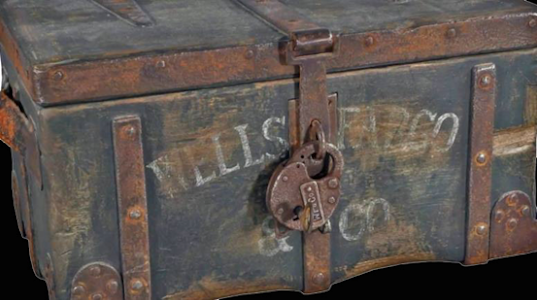


If you haven’t bought the Black book yet, you are missing out…


Jesse James was one of his Names